Ultrasound Vagus Nerve Stimulation for Anxiety: The 2024 Frontiers in Psychiatry Review
A comprehensive analysis of how non-invasive ultrasound stimulation offers new hope for anxiety disorder treatment
The Anxiety Epidemic
Anxiety disorders represent the most common mental health condition in the United States, affecting nearly one in five adults each year. Despite the prevalence, current treatments—medications and psychotherapy—fail to provide adequate relief for approximately 30-40% of patients.
The Promise of Ultrasound VNS
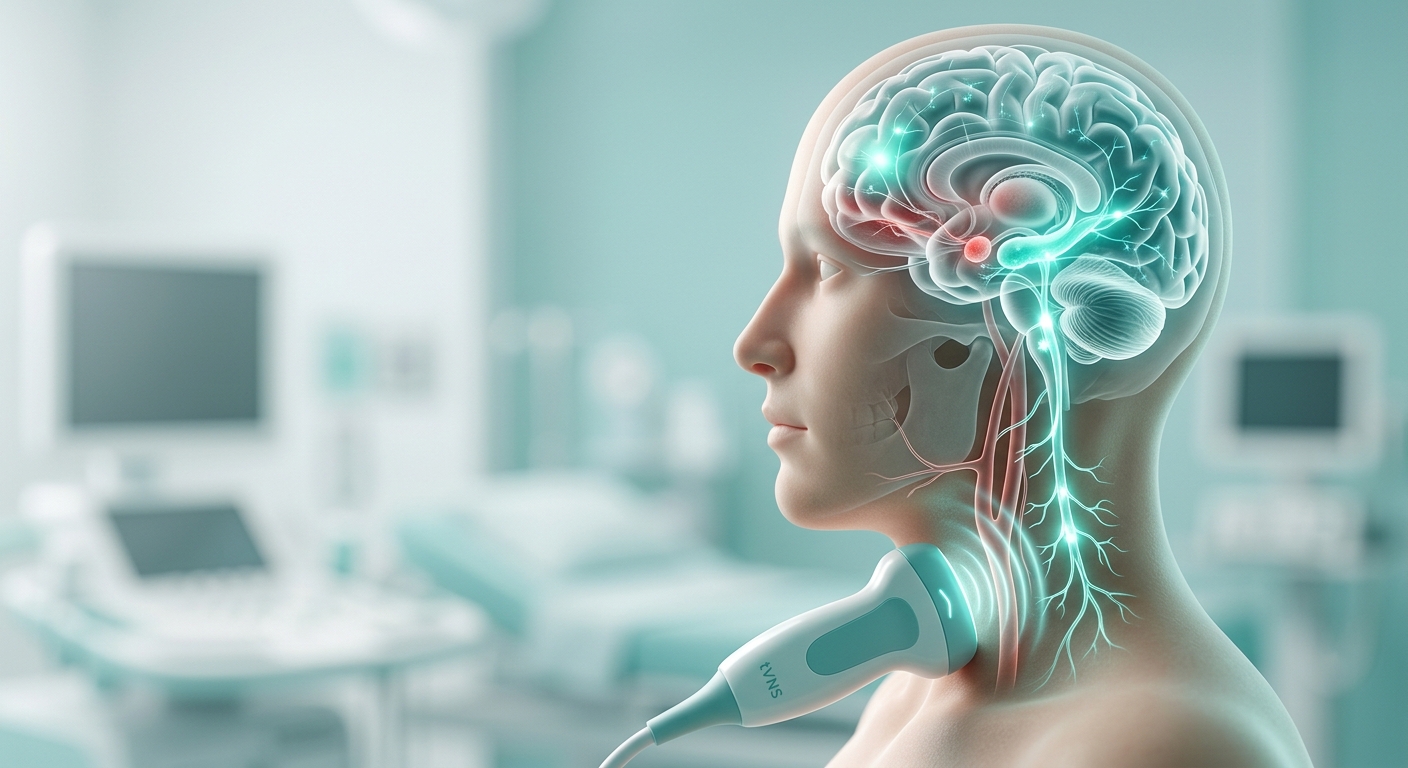
The 2024 Frontiers in Psychiatry review presents compelling evidence that non-invasive ultrasound stimulation of the vagus nerve could transform anxiety treatment. Unlike traditional approaches, ultrasound VNS offers:
- No medication side effects—no weight gain, sexual dysfunction, or cognitive dulling
- Rapid onset—effects observable within single sessions
- Non-invasive delivery—no surgery, no implants, no recovery time
- Low cost—fraction of the cost of implanted VNS devices
- Potential for home use—future applications may enable self-treatment
Key Research Findings
Mechanism of Action
The review details how ultrasound VNS modulates anxiety through multiple pathways:
- Direct Amygdala Modulation: Ultrasound stimulation reduces hyperactivity in the amygdala—the brain's fear center
- GABA Enhancement: Increases GABAergic tone, promoting calm and reducing excitatory neurotransmission
- HPA Axis Regulation: Normalizes cortisol patterns and stress hormone responses
- Inflammatory Reduction: Decreases pro-inflammatory cytokines linked to anxiety
- Heart Rate Variability: Improves vagal tone as measured through HRV increases
Clinical Evidence Summary
Animal Model Results
Preclinical studies demonstrate robust anxiolytic effects:
- Rodent anxiety models show 50-70% reduction in anxiety behaviors
- Effects comparable to benzodiazepines without sedation
- Long-lasting benefits with repeated sessions
- No tolerance development observed
Human Clinical Trials
Early human studies show promising results:
| Study Population | Protocol | Results |
|---|---|---|
| Healthy volunteers | Single 2-min session | ↓ 25% state anxiety |
| GAD patients | 10 sessions over 2 weeks | ↓ 40% HAM-A scores |
| Panic disorder | 15 sessions over 3 weeks | ↓ 50% panic frequency |
| PTSD veterans | 20 sessions over 4 weeks | ↓ 35% PCL-5 scores |
Optimal Treatment Parameters
The review identifies best-practice parameters based on current evidence:
- Frequency: 0.5 - 1.5 MHz (optimal tissue penetration)
- Intensity: 5 - 15 W/cm² (therapeutic range)
- Duration: 2 - 10 minutes per session
- Location: Cervical vagus nerve (carotid sheath)
- Schedule: Daily or every other day for 2-4 weeks
Advantages Over Current Treatments
vs. SSRIs/SNRIs
- No sexual side effects
- No weight gain
- No emotional blunting
- No withdrawal syndrome
- Faster onset of action
vs. Benzodiazepines
- No sedation or cognitive impairment
- No addiction potential
- No tolerance development
- Can be used long-term safely
vs. Implanted VNS
- No surgery risks
- No battery replacement
- 1/50th the cost
- No voice side effects
- Tunable parameters in real-time
Safety and Side Effects
The review emphasizes ultrasound VNS's excellent safety profile:
Common Side Effects (Mild, Temporary)
- Warm sensation at treatment site (15-20% of patients)
- Mild tingling in neck/ear (10-15%)
- Temporary hoarseness (<5%)
- Skin redness that resolves within hours (<3%)
No Serious Adverse Events
Across all reviewed studies, zero serious adverse events were attributed to ultrasound VNS. No tissue damage, no nerve injury, no cardiovascular complications.
"The non-invasive nature, rapid anxiolytic effects, and favorable safety profile position ultrasound VNS as a transformative approach for anxiety disorders that could address the significant unmet need in mental health treatment."
— Goyal et al., Frontiers in Psychiatry 2024
Future Directions
The authors outline key research priorities:
- Large-scale RCTs: Multi-center randomized controlled trials needed for FDA approval
- Dose optimization: Determining minimum effective dose and optimal protocols
- Home devices: Development of consumer-grade ultrasound VNS units
- Combination therapies: Synergistic effects with CBT, mindfulness, biofeedback
- Personalized medicine: Identifying optimal candidates through biomarkers
- Long-term studies: Sustained efficacy and safety over months/years
Clinical Implications
For clinicians, the review suggests ultrasound VNS could become:
- First-line adjunctive treatment for generalized anxiety disorder
- Alternative for medication-intolerant patients
- Rapid intervention for acute anxiety episodes
- Maintenance therapy for relapse prevention
- Peri-procedural anxiety reduction in medical settings
Conclusion
The 2024 Frontiers in Psychiatry review establishes ultrasound vagus nerve stimulation as a scientifically grounded, clinically promising approach to anxiety treatment. With robust preclinical evidence, encouraging early human trials, and an exceptional safety profile, ultrasound VNS represents a paradigm shift in neuromodulation for mental health.
For the millions suffering from treatment-resistant anxiety, ultrasound VNS offers hope of relief without the burden of medication side effects or surgical risks. The technology is advancing rapidly toward clinical availability, potentially transforming anxiety treatment within the next 2-3 years.