What If Your Body Already Had a "Chill Switch" for Depression?
How a 200-year-old nerve discovery is revolutionizing mental health treatment—and why you might be hearing a lot more about "vagus nerve stimulation"
Reading time: ~8 minutes | Topic: Breakthrough treatments for depression & anxiety
Picture this: You've tried everything. The antidepressants that promised to lift the fog. The therapy sessions where you unpacked your childhood. The meditation app you downloaded at 2 AM during another sleepless night. And still, that heaviness lingers.
If this sounds familiar, you're not alone. Not even close.
Over 280 million people worldwide live with depression. Nearly 300 million grapple with anxiety disorders. We've poured billions into developing psychiatric medications—dozens of them now line pharmacy shelves—yet here's the gut punch: about one in three people with major depression never find relief, even after trying multiple treatments.
For years, these "treatment-resistant" patients faced bleak options: electroconvulsive therapy (yes, the one from One Flew Over the Cuckoo's Nest) or invasive brain surgeries. Not exactly appealing.
But what if I told you there's a treatment that works with your body's natural wiring? One that doesn't flood your system with chemicals but instead speaks directly to a nerve that's been hanging out in your neck this whole time, quietly controlling your stress response?
Welcome to the world of Vagus Nerve Stimulation (VNS)—and it might just be the most exciting thing happening in mental health right now.
The Forgotten Superhighway in Your Neck
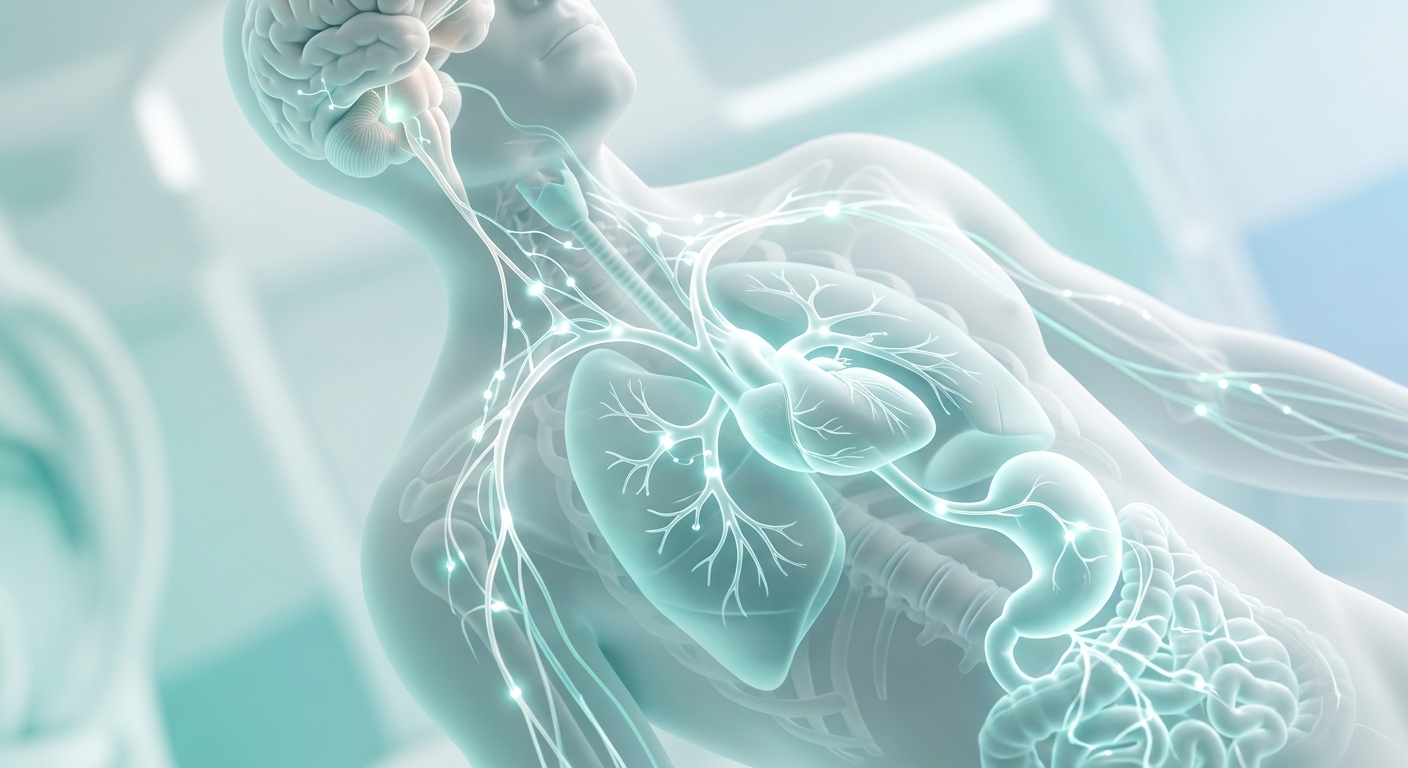
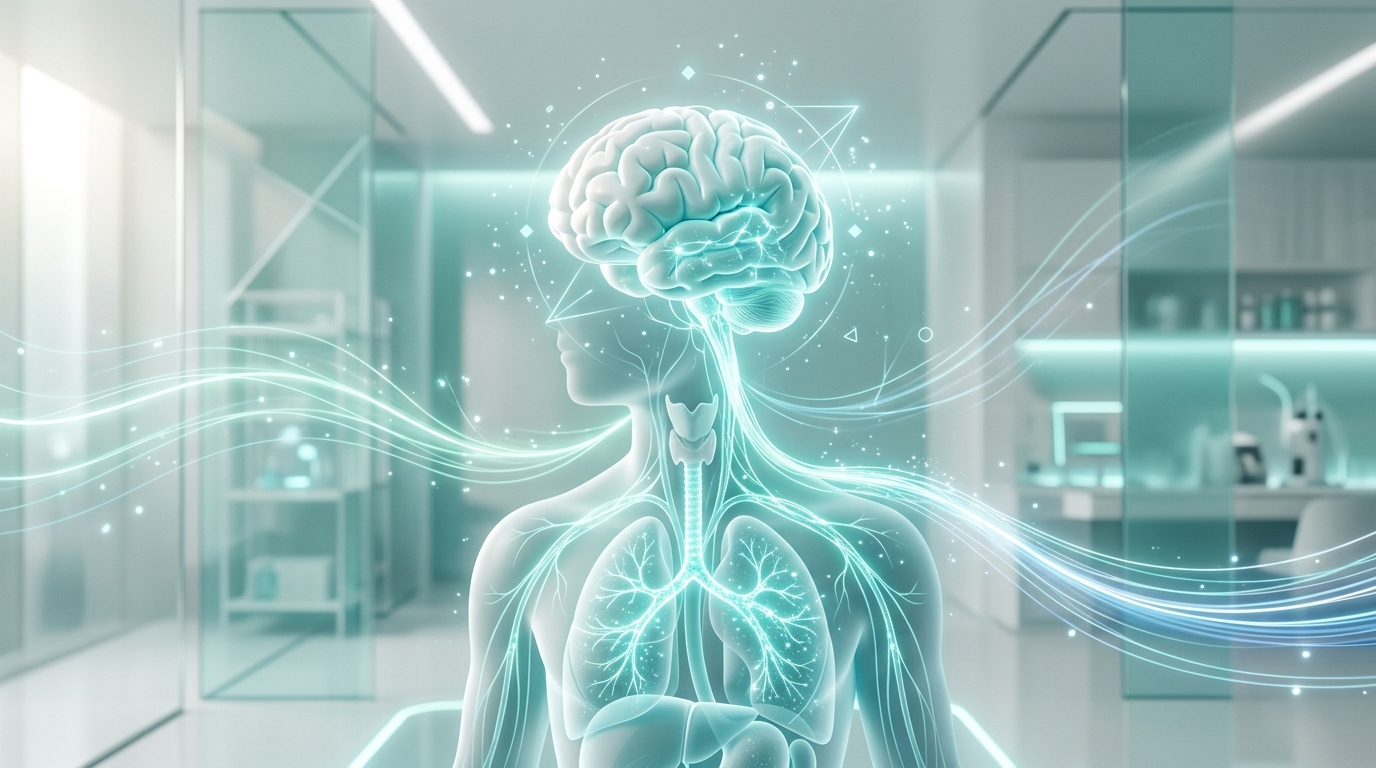
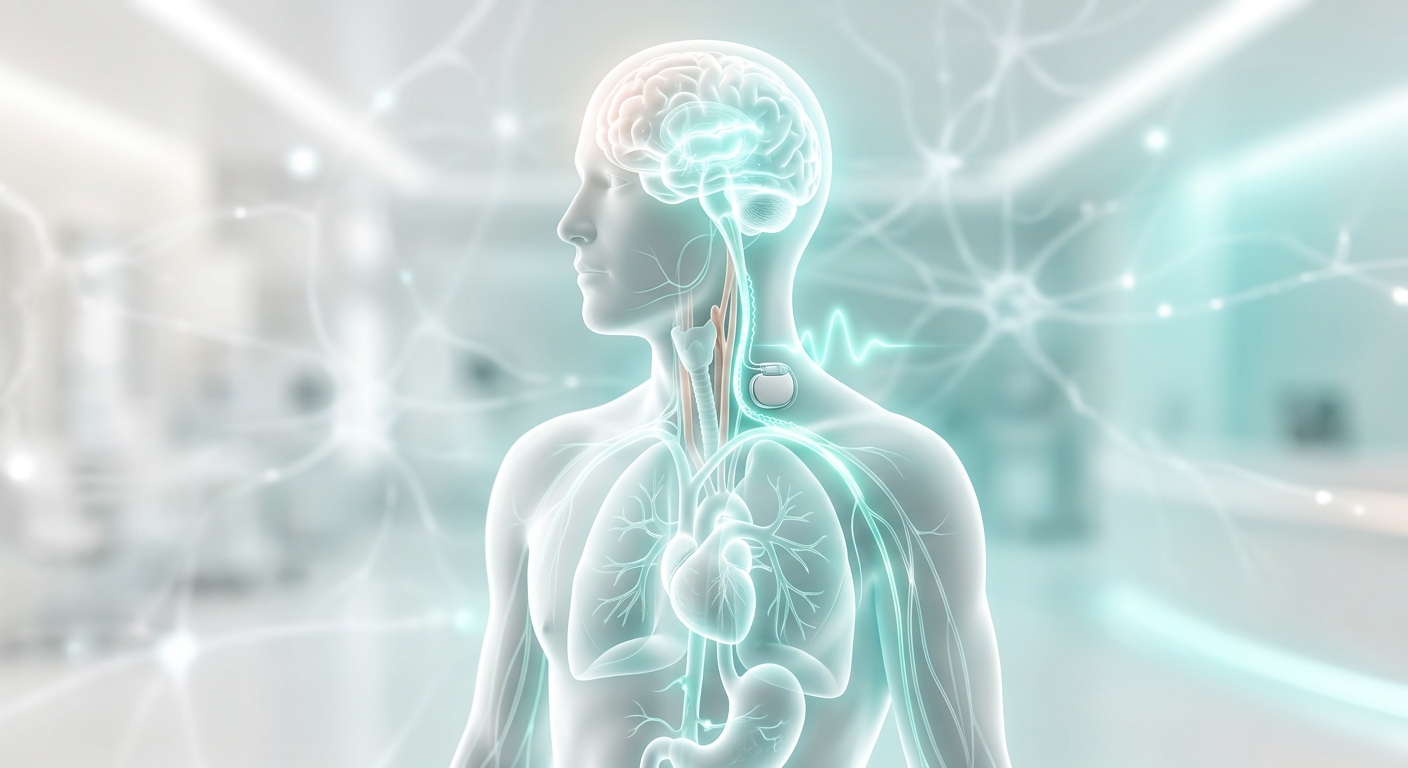
The vagus nerve sounds like something out of a sci-fi novel, but it's very real, and it's been hiding in plain sight. Running from your brainstem down through your neck, chest, and abdomen, this wandering nerve connects to pretty much everything important: your heart, your lungs, your digestive system, and—crucially—areas of your brain that regulate mood.
Think of it as your body's built-in chill-out system. When you're stressed, your heart races. When you're calm, your vagus nerve helps slow it down. It's the unsung hero of your parasympathetic nervous system—the "rest and digest" counterbalance to your fight-or-flight response.
Scientists have known about the vagus nerve for centuries. What they didn't know until recently was that tickling this nerve with gentle electrical pulses could fundamentally change how the brain processes emotions.
In 2005, the FDA approved VNS for treatment-resistant depression. But here's the catch: early versions required surgery. Doctors had to implant a device under the skin of your chest, thread wires up to your neck, and—well, you can see why adoption was slow.
Fast forward to today, and the landscape is shifting dramatically.
How Does Zapping a Nerve Actually Help Depression?
I know what you're thinking: "Electricity in my neck is supposed to make me feel better?"
It sounds wild, but the science is surprisingly elegant.
Traditional antidepressants work by flooding your brain with chemicals like serotonin and norepinephrine. They're trying to fix the "chemical imbalance" theory that's dominated psychiatry for decades. The problem? Depression isn't just about chemicals. It's about circuits—how different brain regions talk to each other.
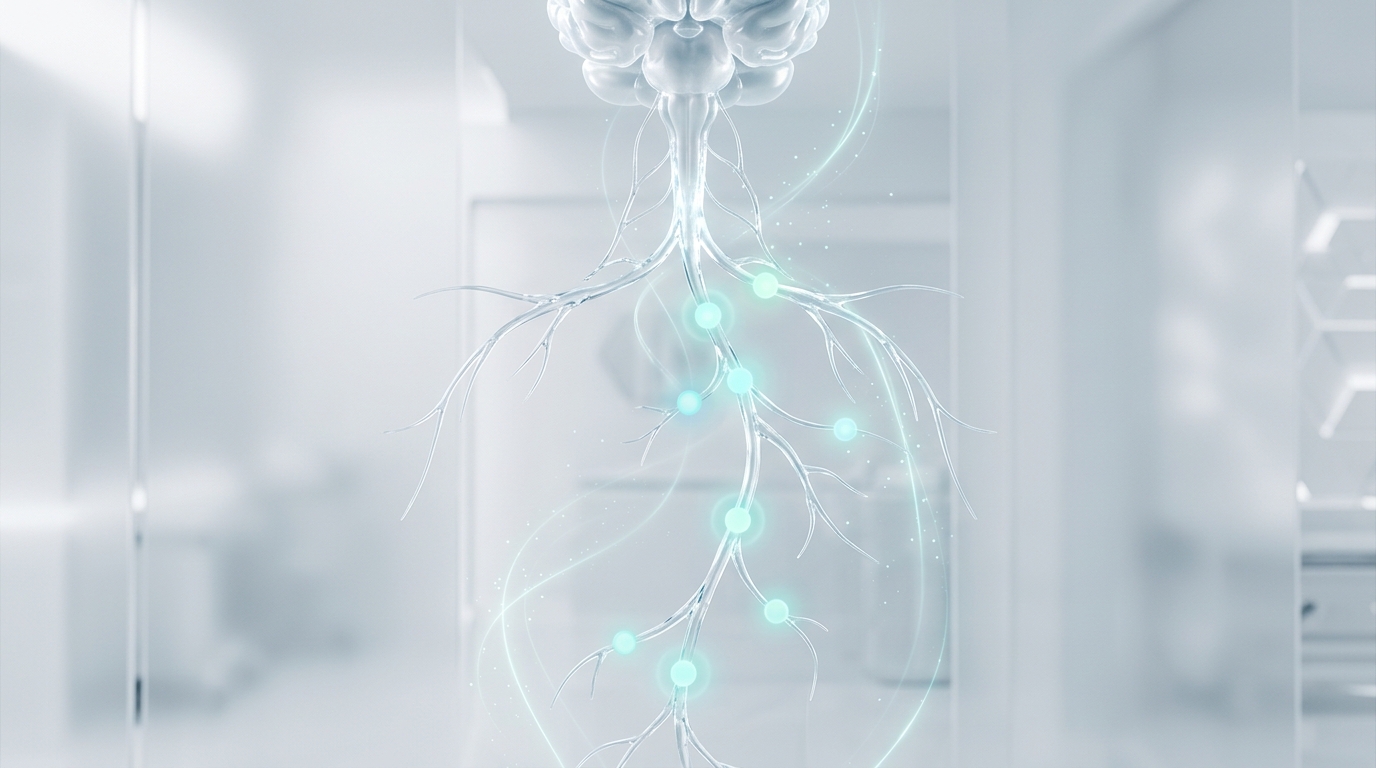
Your vagus nerve is essentially a two-way highway between your body and brain. About 80% of its traffic flows upward, carrying signals from your organs to your brain. When you stimulate this nerve, you're sending a steady stream of "all is well" messages upstairs.
Here's what happens inside your skull:
The locus coeruleus wakes up—this brain region produces norepinephrine, boosting focus and alertness
The limbic system calms down—that emotional roller coaster starts smoothing out
Neuroplasticity increases—your brain literally becomes more flexible, able to form new, healthier patterns
Inflammation decreases—chronic inflammation is increasingly linked to depression, and VNS helps dial it back
It's not a quick fix. Patients typically don't feel results for weeks or months. But for people who've exhausted every other option, VNS offers something precious: hope that isn't attached to another pill bottle.
Meet the People Who Tried Everything Else
Sarah (name changed for privacy) had been depressed for fifteen years. She'd cycled through Prozac, Zoloft, Lexapro, Effexor, and combinations she couldn't pronounce. She'd done cognitive behavioral therapy, dialectical behavior therapy, even ketamine infusions. Nothing stuck.
"I was literally researching which states allowed assisted suicide," she told researchers in a clinical trial. "That's how hopeless I was."
Sarah received a VNS implant in 2019. Six months later, she reported her first symptom-free week in a decade. Two years later, she was working part-time and rebuilding relationships she'd abandoned.
Stories like Sarah's aren't outliers in the VNS literature. Studies show that roughly 30-40% of treatment-resistant patients experience significant improvement with VNS—and these are people who failed everything else.
Here's what makes this especially exciting: the benefits appear to increase over time. Unlike medications that often lose effectiveness (or require dosage increases), VNS seems to keep working—and in some cases, keeps getting better—the longer you use it.
One five-year study found that patients who responded to VNS had lower relapse rates than those on standard treatment. Your brain, it seems, can learn to be healthier.
The Game-Changer: No Surgery Required
If the idea of chest surgery gave you pause, I have good news. The VNS landscape is transforming—and fast.
Researchers have discovered that you don't need to implant a device to stimulate the vagus nerve. The nerve runs close to the skin in several accessible locations, including your ear and neck. This has sparked an explosion of non-invasive approaches:
Transcutaneous VNS (tVNS) uses clips or stickers on the ear. You sit there for 20 minutes while gentle pulses do their work. FDA-cleared devices are already available for home use.
Ultrasound VNS is even more futuristic. High-frequency sound waves can penetrate tissue and stimulate the nerve without any physical contact. Early studies suggest it might be just as effective as electrical stimulation.
Breathwork and cold exposure offer DIY options. Deep, slow breathing and cold water on your face naturally activate the vagus nerve. While not as potent as medical devices, these practices are free, accessible, and increasingly validated by research.
The democratization of vagus nerve stimulation is already underway. What was once a last-resort surgical procedure for the most desperate patients is becoming a viable option for millions more.
But Let's Be Real: What Are the Downsides?
No treatment is perfect, and VNS has its challenges.
The surgical version carries standard surgical risks: infection, bleeding, voice changes (from the nerve's proximity to your vocal cords), and the discomfort of having a device implanted. About 1 in 4 patients experience side effects significant enough to consider device removal.
Non-invasive versions are safer but less potent. You might need daily 20-minute sessions for weeks before noticing changes. And insurance coverage is spotty—many plans still consider VNS "experimental" for mental health, despite nearly two decades of FDA approval.
Cost is another reality check. Surgical VNS can run $30,000-$50,000. Even non-invasive devices often cost hundreds or thousands of dollars out of pocket.
Perhaps most importantly: VNS doesn't work for everyone. That 30-40% response rate means 60-70% of patients don't see meaningful improvement. We still can't reliably predict who will benefit.
Important: If you're struggling with depression, VNS isn't a first-line treatment. Talk to your doctor about therapy, lifestyle changes, and medication first. VNS is designed for people who haven't responded to these standard approaches.
What This Means for the Future of Mental Health
We're standing at an inflection point in psychiatry. For decades, we've treated mental health as a chemical problem to be solved with chemical solutions. VNS represents a different paradigm entirely: mental health as a neuromodulation problem.
The implications extend far beyond depression. Researchers are exploring VNS for:
PTSD—helping trauma survivors reset their threat-detection systems
Addiction—reducing cravings by modulating reward pathways
Inflammatory conditions—from rheumatoid arthritis to Crohn's disease
Long COVID—addressing the neurological symptoms that linger after infection
The vagus nerve, it turns out, is a master regulator of both body and mind. Understanding how to speak its language opens doors we didn't know existed.
Dr. Kevin Tracey, a pioneer in this field, puts it beautifully: "The vagus nerve is the interface between the brain and the immune system. By stimulating it, we're not just treating symptoms—we're addressing root causes of disease."
Your Takeaway: The Body-Wise Revolution
Here's what I hope you remember from this article:
If you or someone you love has been battling treatment-resistant depression or anxiety, you haven't run out of options. The mental health field is evolving rapidly, and treatments like VNS—especially the emerging non-invasive versions—offer real promise where traditional approaches have failed.
But even if you're not struggling with mental illness, the vagus nerve discovery has something to teach you. Your body and brain are deeply, intricately connected. That breathwork class your friend keeps recommending? That cold shower trend? They're not just wellness fads—they're tapping into ancient biological pathways that modern science is only now beginning to understand.
The "chill switch" isn't a metaphor. It's real, it's in your body right now, and we're getting better at flipping it every day.
And that? That's worth getting excited about.
Want to learn more? If you're interested in non-invasive vagus nerve stimulation, talk to a healthcare provider about FDA-cleared devices like gammaCore or explore evidence-based vagus nerve exercises including paced breathing, cold exposure, and humming/singing practices.